
Adaline’s Smokehouse
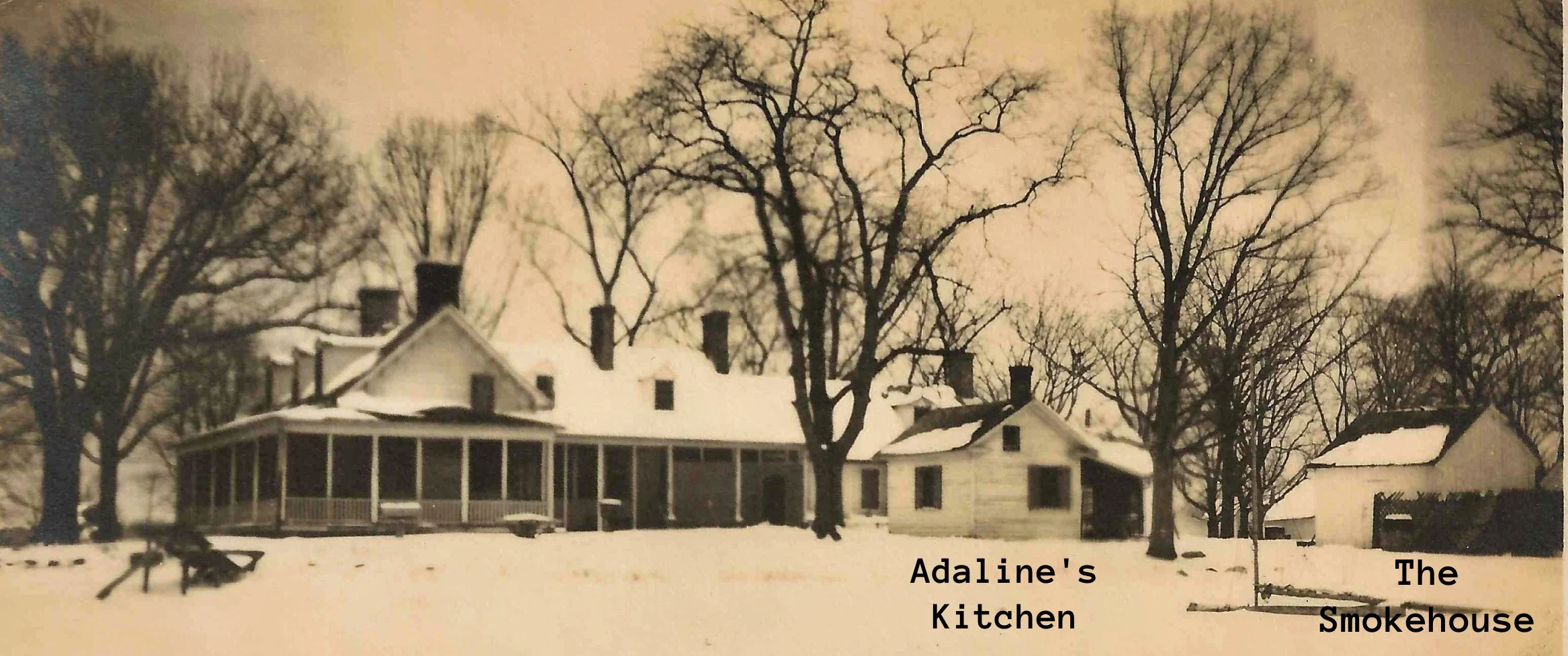
Location of Adaline’s Kitchen and Smokehouse at Spocott – January 1918
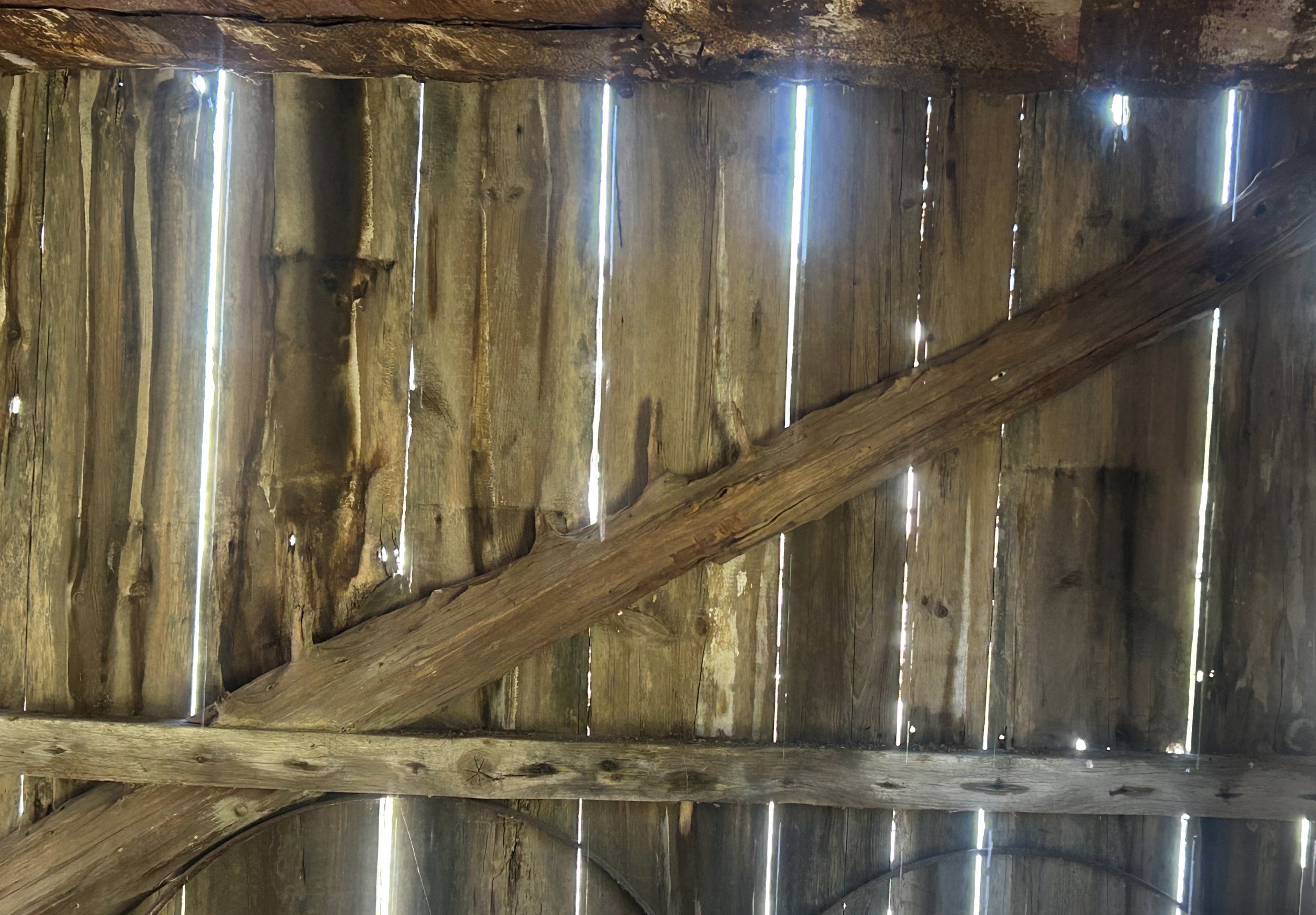
Interior Construction
A smokehouse was an essential structure on most colonial farms. An Eastern Shore study found that two-thirds of farms in the area had a smokehouse in the 18th century. Without electricity or refrigeration, preserving meat was challenging, and the smokehouse provided the solution. A smokehouse stood beside Adaline Wheatley’s outdoor kitchen on the Spocott property, and she used it to cure meat, primarily pork. The simple one-story wooden structure had no windows or chimney. Its construction was simple yet sturdy, with small logs often used as cross braces.
Meat was cured with salt to remove moisture and hung from the ceiling. Over several weeks, a smoldering fire on the earthen floor coated the meat with a layer of charcoal, which could preserve it for up to two years. People generally used hardwoods, as burning pine produced smoke with too much resin. Hickory was often used, but each hardwood imparted a slightly different flavor to the meat. Before eating the meat, the charcoal layer was removed, and the salt was boiled out of the meat.
Adaline died in 1929, and by 1931 her kitchen and the smokehouse had been relocated to another part of the property. Spocott added an indoor kitchen, but electricity and running water would not be available for another decade and a half. Although Adaline’s kitchen eventually deteriorated, the smokehouse survived and was moved to the Spocott Windmill Village in the 1980s. At that time, the windmill trustees converted it into a blacksmith shop on the property. We are returning it to its original use and placing it near Adaline’s Cottage.
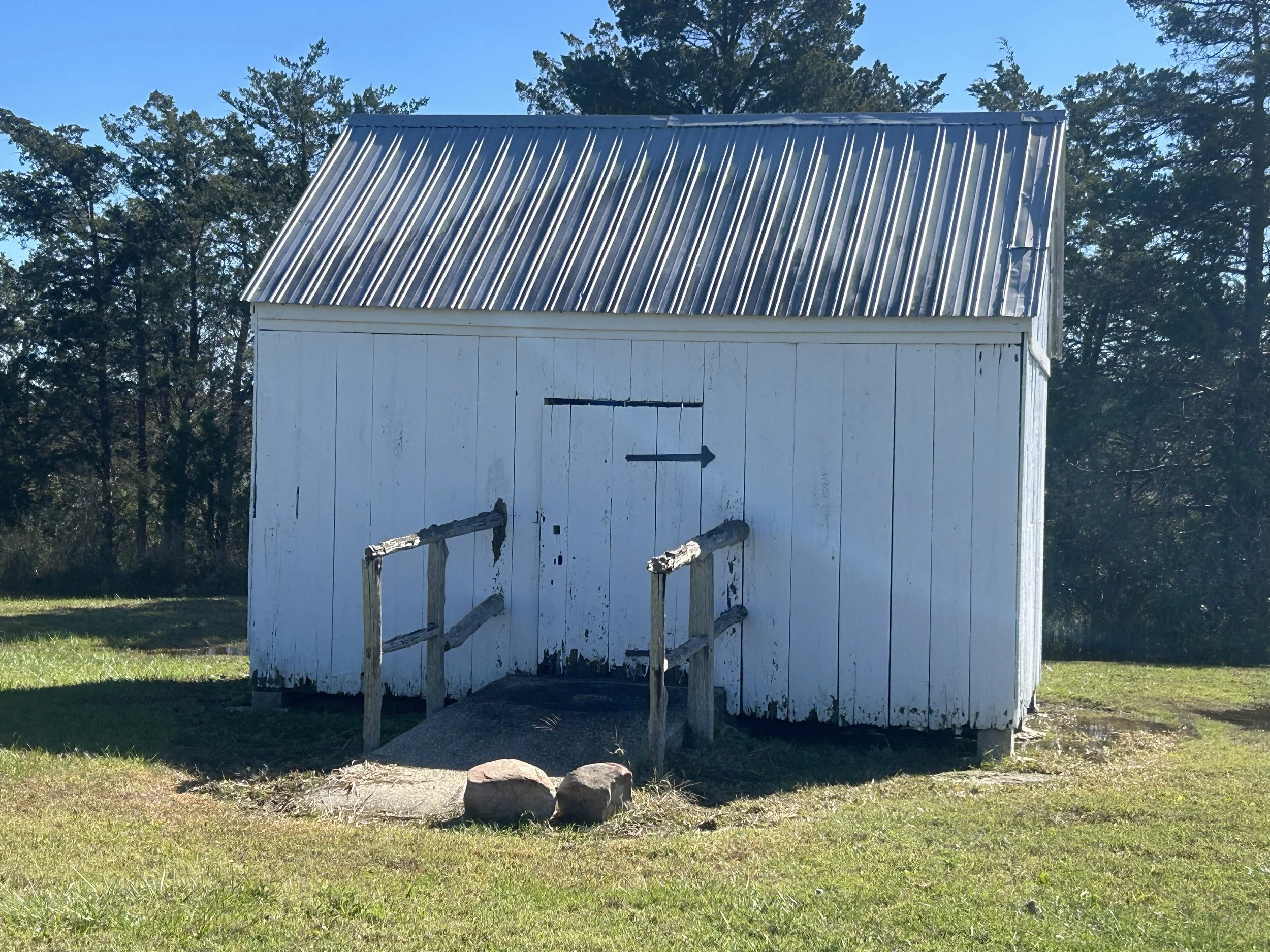
The Smokehouse, 2026